Pelvic Ultrasound for Menstrual Concerns & Pelvic Pain
When your periods become heavier, your cycle changes or pelvic pain starts affecting your day, you deserve time to discuss what’s happening and understand your options.
At Mint Reproductive, we offer in-office pelvic ultrasound as part of an assessment of menstrual concerns and pelvic discomfort. Looking at the uterus, uterine lining and ovaries can provide additional information to help guide your care.
When Might a Pelvic Ultrasound Be Helpful?
Not every concern requires a scan. Your screening consultation helps determine whether in-office ultrasound is appropriate, what information it may provide and whether you need a different assessment first.
A pelvic ultrasound may be considered when you’re experiencing:
- Periods that are heavy or last longer than usual
- Irregular cycles or bleeding between periods
- Period pain that interferes with your everyday activities
- Ongoing pelvic discomfort or a feeling of pressure
- Symptoms that raise questions about fibroids, ovarian cysts or other uterine or ovarian changes
Sudden or severe pelvic pain, heavy bleeding with dizziness or fainting, or pain and bleeding when pregnancy is possible need urgent medical assessment. Do not wait for a routine ultrasound appointment.
What Can Pelvic Ultrasound Help Assess?
At Mint, we use ultrasound to look at aspects of your uterine and ovarian health that may be relevant to your symptoms. A scan may suggest a reason for further investigation, but this observation is not the same as a confirmed diagnosis. We explain what we can see, what remains uncertain and what follow-up may be needed.
Heavy or Irregular Periods
If your bleeding pattern has changed, ultrasound can provide information about the lining of the uterus and possible structural changes. These observations may help guide further assessment of heavy periods, prolonged bleeding or spotting between periods.
The uterine lining changes naturally through the menstrual cycle, so its appearance needs to be considered alongside your age, cycle timing and symptoms. Depending on your circumstances, bloodwork or other investigations may also be recommended.
Fibroids, Polyps & Uterine Changes
Fibroids and uterine polyps may be relevant to heavy bleeding, pelvic pressure or changes in your periods. In-office ultrasound may suggest a structural change in the uterus or its lining that needs a closer look.
If something warrants investigation, we can recommend formal diagnostic imaging or specialist assessment. Not every finding explains a person’s symptoms, and some changes require more detailed testing than an in-office scan can provide.
Ovarian Cysts & Pelvic Discomfort
When pelvic discomfort raises questions about the ovaries, ultrasound may provide useful information about their appearance. Some cysts are related to the menstrual cycle, while others need further assessment.
We consider your symptoms and history alongside any observations when discussing the next step. Depending on the concern, that may involve formal imaging, follow-up or referral.
PMOS (PCOS) & Irregular Cycles
If you have irregular cycles or concerns about Polyendocrine metabolic ovarian syndrome (PMOS), the appearance of the ovaries may contribute to a broader assessment. Ultrasound alone cannot diagnose PMOS, and not everyone being assessed for PMOS needs a scan. Your cycle history, symptoms, relevant bloodwork and other possible causes of irregular periods also need to be considered.
Adenomyosis & Painful Periods
Adenomyosis involves tissue similar to the uterine lining within the muscular wall of the uterus. It can be associated with heavy bleeding and painful periods.
An in-office scan may reveal changes in the uterine wall that raise suspicion of adenomyosis. These observations can help guide further assessment, Mint’s POCUS service does not provide a formal imaging diagnosis.
Endometriosis & Persistent Pelvic Pain
Ultrasound may show an ovarian endometrioma, a type of cyst associated with endometriosis. However, many areas of endometriosis are not visible on a scan.
A normal ultrasound does not rule out endometriosis. If painful periods or pelvic pain persist, further assessment may still be appropriate.
What to Expect at Your Appointment
A Screening Consultation
Your appointment process begins with a screening call. We’ll discuss your symptoms, menstrual history, relevant previous investigations and what you hope to learn. This helps establish whether POCUS is suitable and whether the timing of your scan matters. If you already have imaging reports or test results, let us know so we can advise you on what to bring.
A Scan with Your Consent
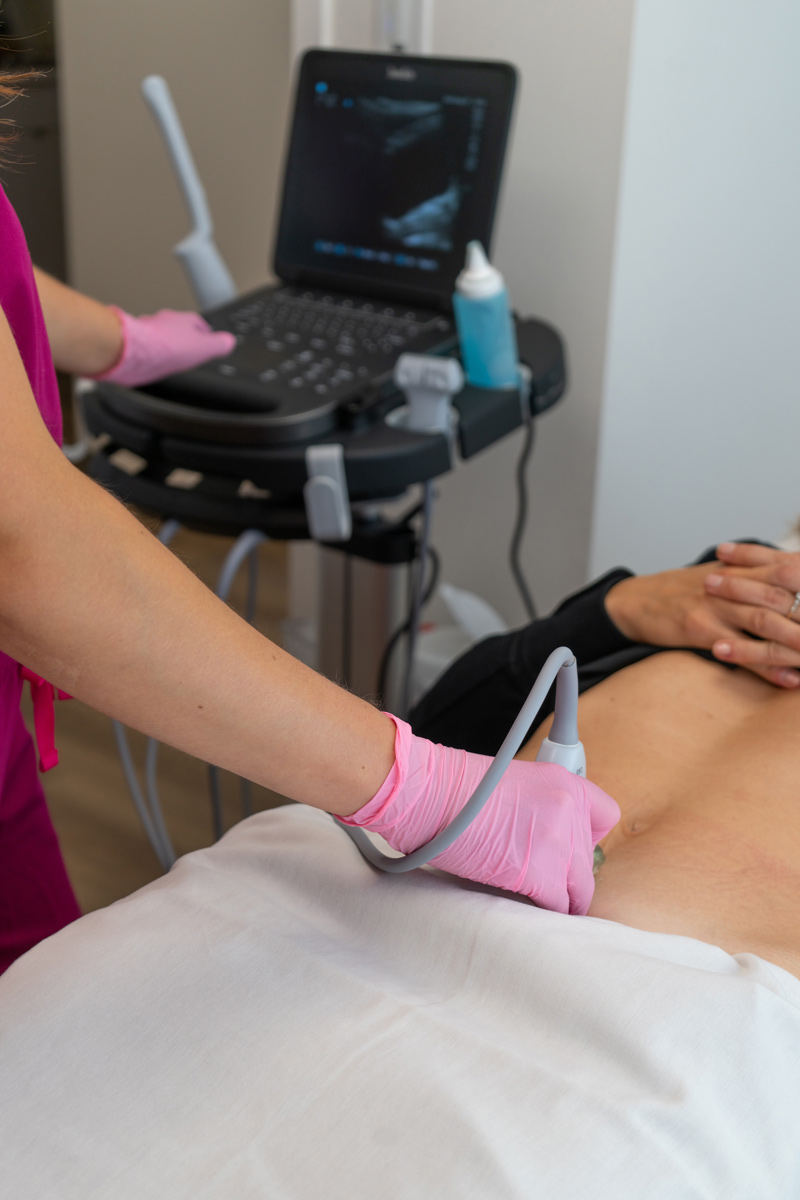
Depending on your circumstances, an abdominal or transvaginal scan may be considered. An abdominal scan uses a camera over your lower abdomen. A transvaginal scan uses a camera placed inside the vagina to view pelvic structures more closely. We explain the proposed approach before proceeding. You can ask questions, decline an internal scan or request a pause or stop at any time. If an approach is not suitable for you, we’ll discuss the alternatives and their limitations.
A Conversation About Next Steps
Your provider will discuss the observations during your visit and explain whether additional investigation is recommended. POCUS at Mint is an informational service. It does not include a formal radiology diagnostic report or replace an ultrasound requested by your doctor or another healthcare provider.
Pelvic Ultrasound FAQs
Some commonly asked ultrasound questions. If you’re curious about our services, our process, or how we can help, please contact the clinic.
You can contact Mint directly to arrange a screening consultation. Healthcare providers can also refer patients using our referral information. A screening call is required before imaging to determine whether the service is appropriate.
Having your period does not automatically mean you need to postpone. Timing depends on the reason for the scan. We’ll advise you during your screening call, so contact us before changing an appointment.
Some people experience pressure or discomfort, particularly if they already have pelvic pain. Tell your provider if anything hurts. You remain in control and can ask to pause or stop the scan.
Please contact the clinic for current screening consultation and scan fees. We can explain the anticipated charges before you book, including whether any additional appointments or tests would involve separate fees.
Book a Pelvic Ultrasound Screening Call
If changes in your periods or pelvic discomfort are leaving you with questions, start with a screening call. We’ll discuss your concerns and help determine whether in-office ultrasound is an appropriate next step.