
Most people hear “ultrasound” and picture a separate appointment somewhere else. You get a requisition, wait for a spot, see a technician, and then wait another week or two for the report to reach your doctor. That kind of ultrasound is still really important, and we refer for it often. But there’s another kind that has changed how we practice.
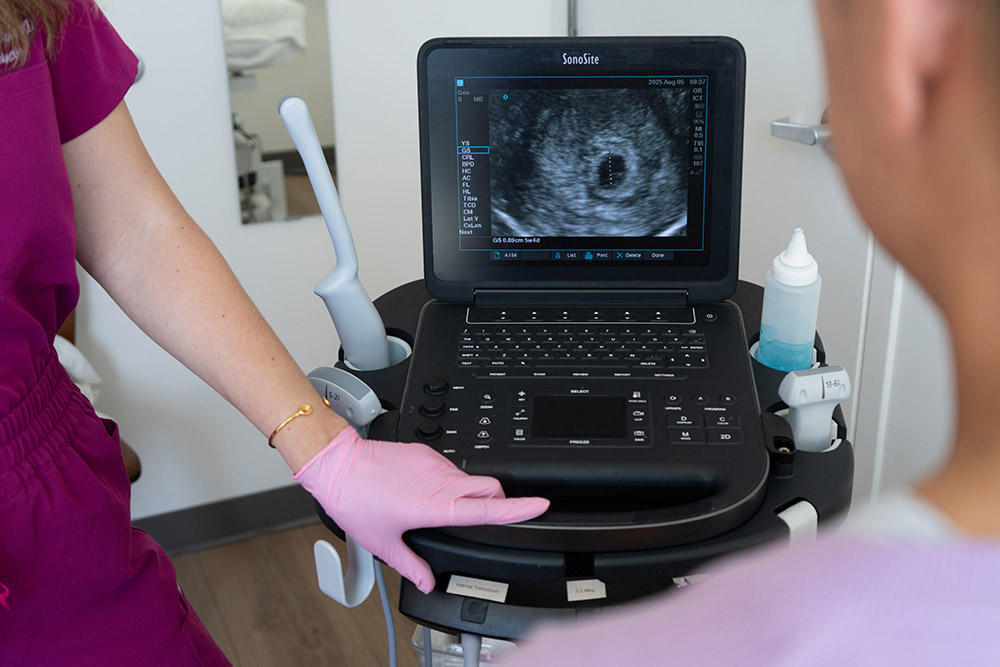
Point-of-care ultrasound, or POCUS, is a scan your own clinician does in the exam room during your visit. We look at the screen together and talk about what we’re seeing while you’re still there.
How Naturopathic Doctors Use POCUS in Reproductive Health
As naturopathic physicians, we want to know why something is happening before we decide how to treat it. In gynecology, that’s harder than it sounds. Heavy periods, pelvic pain, spotting, irregular cycles and trouble conceiving can each have several causes, and a history and pelvic exam can only tell us so much.
What POCUS Can—and Can’t—Tell You
We’re upfront with patients that POCUS doesn’t replace diagnostic imaging. In BC, ultrasound done by naturopathic physicians is for information purposes, and anything that needs a formal diagnostic read goes to a radiologist. What it does give us is a clearer picture right when we’re making decisions with you. We spend less time guessing, and when you need a referral, we can usually say exactly what we’re looking for.
What Can an In-Office Pelvic Ultrasound Help Assess?
Endometrial Thickness and Irregular Bleeding
We measure the lining of the uterus a lot. If you have heavy or irregular bleeding, it helps us decide whether a hormonal IUD, cycle support or a referral is the better next step. During a fertility workup, it shows us how your lining changes through the cycle. And if you’re in perimenopause or post menopause and bleeding unexpectedly, it may tell us you need to see a specialist sooner.
Fibroids and Uterine Health
Heavy periods, pelvic pressure or a uterus that feels enlarged on exam can all make us think of fibroids, and a scan helps us see whether they’re likely involved. They matter for IUD planning too, because some fibroids change the shape of the uterine cavity. If we see something, we send you for formal imaging with a specific question on the requisition, which tends to get you clearer answers.
Ovarian Cysts and Pelvic Pain
Lots of cysts are a normal part of the cycle and go away on their own. If you come in with pelvic pain, being able to look right then helps us sort out whether we can recheck after your next period or whether you need formal imaging and a referral now.
PMOS (formerly PCOS) and Ovarian Follicles
In adults, one way PMOS is identified is by counting the small follicles in each ovary or measuring the size of the ovaries. If you’re dealing with irregular cycles, acne, hair changes or trouble getting pregnant, a scan plus bloodwork helps us see whether PMOS might be the explanation. It also shows us whether you’re ovulating, and that shapes the plan. For some people that means cycle and metabolic support. For others it’s ovulation tracking, or a referral to confirm the diagnosis.
Signs of Adenomyosis
Adenomyosis is common, and people with painful, heavy periods often go years without anyone mentioning it. On ultrasound we sometimes see an enlarged or uneven-looking uterine wall that makes us suspect it. We can’t diagnose it in the office, but noticing those signs means we can explain what might be going on, start treating your symptoms and get you to the right imaging sooner.
Fertility Ultrasound and Cycle Assessment
Our fertility assessment program pairs in-office ultrasound with bloodwork. We look at your antral follicle count, how your follicles are developing, your uterine lining and the general shape of your uterus and ovaries. Seeing that during the visit helps us choose which labs are worth doing and when in your cycle to do them. It also tells us whether you should be talking to a fertility clinic sooner rather than later.
Early Pregnancy Ultrasound
A positive test usually comes with a lot of questions, and it can be weeks before you see a family doctor or midwife. An early scan can help confirm the pregnancy is in the uterus, check for a heartbeat once it’s far enough along, and give a rough idea of dates. If you’re spotting or cramping, or something doesn’t look the way we’d expect, we send you for formal imaging or urgent care right away. If you have severe pain or heavy bleeding, please go to emergency instead of booking with us.
Other Uses for Point-of-Care Pelvic Ultrasound
Tracking Ovulation
If you’re trying to conceive, a couple of well-timed scans can show a follicle growing and then releasing. Period apps can only estimate when you ovulate; a scan shows it.
Endometriosis and Ovarian Endometriomas
Most endometriosis doesn’t show up on ultrasound, so a normal scan doesn’t rule it out. Endometriomas, the cysts endometriosis can form on the ovaries, often do show up, and finding one helps us move faster on a referral and a pain plan.
Uterine Polyps and Uterine Shape
Occasionally a scan suggests a polyp in the lining, or a uterus that’s shaped a bit differently than usual. Both can affect bleeding, IUD choice and fertility, so we refer you for formal imaging.
Unexplained Pelvic Pain
Sometimes we scan and don’t find a cause. Ruling some things out still helps us decide what to do next, and plenty of patients are just glad to know.
Book a Reproductive Health Visit in Vancouver
Mint Reproductive Health is at 1541 West Broadway in Vancouver. You can book online or call 604-251-3456. Patients can self-refer, and providers can fax referrals to 778-508-7645.
